Category: Tech

Stay updated with Technology News and Science-related Articles covering AI, cybersecurity, gadgets, software, and digital innovation shaping the future.

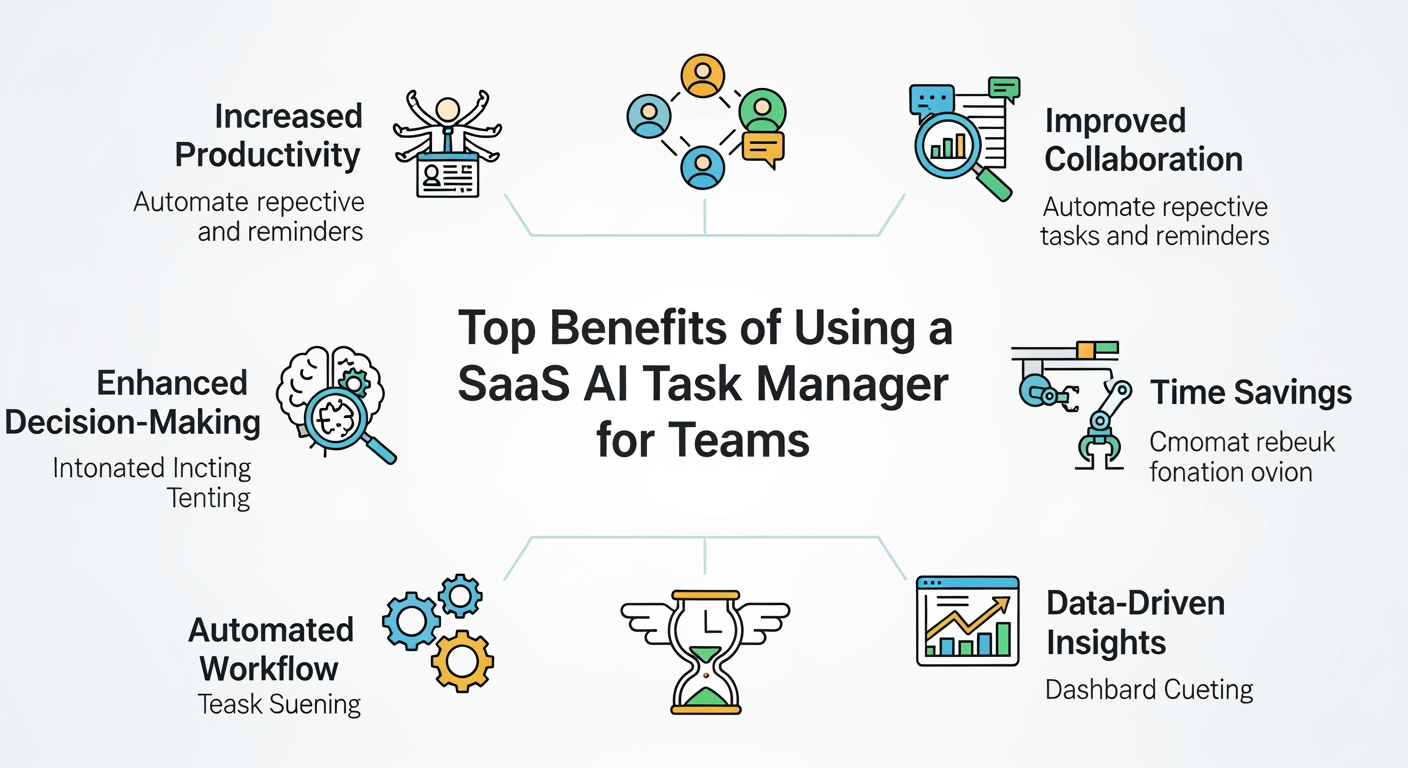
  • Top Benefits of Using a SaaS AI Task Manager for Teams

    Top Benefits of Using a SaaS AI Task Manager for Teams

    In nowadays speedy-paced digital place of business, groups are predicted to move quicker, collaborate higher, and deliver higher-nice effects often with fewer sources. As remote and hybrid work fashions come to be the norm, dealing with responsibilities thru spreadsheets, e-mail threads, or primary to-do apps is now not enough. this is where a SaaS AI challenge manager steps in.

    A SaaS (software as a service) AI mission manager combines the flexibility of cloud-based totally software with the intelligence of synthetic intelligence to streamline how teams plan, assign, track, and whole work. In place of absolutely list duties, these gear examine records, automate workflows, and offer insights that assist teams work smarter—now not just more difficult.

    Under are the top advantages of the usage of a SaaS AI challenge manager for teams and why it’s quickly turning into an critical device for contemporary organizations.

    1. Smarter assignment Prioritization

    Taken into consideration one of the most critical demanding situations corporations face is figuring out what to paintings on first. Conventional mission managers rely upon guide prioritization, which can be subjective and inconsistent. AI-powered venture managers use information together with deadlines, dependencies, workload, and beyond overall performance to mechanically prioritize obligations.

    This ensures that:

    • High-impact tasks are completed first
    • Urgent deadlines are not missed
    • Team members focus on work that aligns with business goals

    Via getting rid of guesswork, AI facilitates teams concentrate on what clearly matters.

    2. Intelligent Workload Balancing

    Overburdened personnel result in burnout, overlooked closing dates, and reduced productiveness. On the equal time, underutilized crew members constitute lost ability. SaaS AI challenge managers analyze workloads throughout the group and suggest balanced project distribution.

    Benefits include:

    • Stop bottlenecks
    • Reducing burnout
    • enhancing useful resource allocation
    • Increasing overall productivity

    Managers gain visibility into whose overloaded and who has capability, allowing them to make statistics-driven alternatives in real time.

    3. Real-Time Collaboration from Anywhere

    Because SaaS systems are cloud-based totally, crew individuals can get right of entry to them from any location and device. This is in particular valuable for faraway and hybrid groups.

    A SaaS AI task manager provides:

    • Centralized task dashboards
    • Shared project timelines
    • Instant updates and notifications
    • Comment threads within tasks

    This reduces reliance on scattered verbal exchange channels like e mail and chat, ensuring absolutely everyone stays aligned and informed.

    4. Automation of Repetitive Responsibilities

    Repetitive administrative duties eat precious time. AI-powered task managers can automate processes which includes:s

    • Assigning recurring tasks
    • Sending deadline reminders
    • Updating task statuses
    • Generating progress reports

    By automating ordinary movements, teams can commit extra time to strategic and innovative work. Automation additionally reduces human mistakes, ensuring consistency throughout tasks.

    5. Predictive Insights and Forecasting

    AI doesn’t just react—it predicts. SaaS AI mission managers analyze ancient data to forecast capability delays, resource shortages, or project dangers before they arise.

    For example, the system may detect patterns such as:

    • Initiatives consistently going for walks overdue all through sure stages
    • Precise group contributors turning into overloaded at height times
    • Repeated delays due to dependencies

    Those predictive insights empower managers to proactively adjust plans and keep away from high-priced setbacks.

    6. Improved responsibility and Transparency

    Clear responsibility is crucial for crew overall performance. AI task managers create transparent workflows in which duties are truly defined and progress is seen to all stakeholders.

    With a SaaS AI task manager:

    • Each task has a designated owner
    • Deadlines are clearly displayed
    • Progress is tracked in real time
    • Activity logs provide a record of updates

    This transparency builds agree with within teams and ensures absolutely everyone understands their role in attaining mission desires.

    7. Data-Driven Decision Making

    Conventional venture management often is predicated on instinct. In assessment, AI-powered systems offer analytics dashboards that supply measurable insights into team overall performance.

    Key metrics may include:

    • Challenge of completion charges
    • Average time in step with assignment
    • Mission turnaround instances

    Those insights assist leaders choose out strengths, deal with weaknesses, and optimize workflows based totally on evidence in preference to assumptions.

    8. Seamless Integration with Other Equipment

    Contemporary groups use multiple gear—conversation apps, CRM structures, record garage platforms, and extra. SaaS AI assignment managers generally integrate seamlessly with existing software ecosystems.

    This integration allows teams to:

    • Sync tasks with calendars
    • Automate workflows between platforms
    • Reduce duplicate data entry

    By centralizing information, teams save time and reduce friction across systems.

    9. Enhanced Scalability

    As organizations develop, their approaches end up more complicated. A easy task list that works for five humans may not paintings for 50.

    SaaS AI mission managers, often referred to as a SaaS AI Task Manager, are constructed to scale. Whether onboarding new group members or handling multiple departments, a SaaS AI Task Manager adapts to growing workloads and evolving organizational structures.

    Scalability benefits include:

    • Customizable workflows
    • Role-based permissions
    • Multi-project management
    • Employer-Stage Protection

    This adaptability ensures that the device grows alongside the enterprise.

    10. Reduced Operational Costs

    Investing in a SaaS AI challenge manager may additionally appear to be an added cost, but it regularly results in widespread fee savings.

    Here’s how:

    • Fewer missed cut-off dates lessen financial penalties
    • Improved productivity will increase output with out hiring extra group of workers
    • Automation reduces administrative overhead
    • Higher forecasting prevents high priced mission overruns

    Because SaaS systems function on subscription models, corporations avoid massive prematurely infrastructure investments at the same time as still gaining access to superior era.

    11. Faster Onboarding and Training

    While new employees join a group, information workflows and expectancies can take time. A based AI assignment supervisor simplifies onboarding by using offering:

    • Clear task assignments
    • Documented processes
    • Automated guidance and reminders
    • Performance tracking

    New hires can quick recognize their duties and combine into ongoing tasks, accelerating productivity from day one.

    12. Improved Focus and Reduced Distractions

    Switching amongst tools, attempting to find facts, and clarifying priorities all reduce cognizance. SaaS AI Task Manager consolidate essential statistics into a single platform and highlight what calls for immediately interest.

    Capabilities like smart notifications and precedence hints reduce distractions at the same time as making sure vital updates are never overlooked. This promotes deeper attention and extra green paintings classes.

    13. Better Project Visibility for Leadership

    Executives and managers regularly war to gain a clear evaluation of challenge reputation without asking for constant updates. A SaaS AI assignment manager affords high-level dashboards that provide immediately visibility into:

    • Project progress
    • Budget alignment
    • Team performance
    • Risk indicators

    This enables leadership to make strategic decisions quickly and confidently.

    14. Stronger Compliance and Security

    SaaS companies generally provide built-in-grade safety functions, together with statistics encryption, function-based get right of entry to controls, and normal built-in integrated updates. AI also can display unusual patterns or get admission to behaviors, integrated guard sensitive built-iness built integrated.

    For integrationists with regulatory necessities, built-in report integrated and audit trails simplify compliance efforts and reduce chance.

    15. Continuous Improvement through Machine Learning

    Built-in conventional gear, AI-powered systems built-in and improve through the years. As greater built-in is amassed, the platform will become better at:

    • Predicting timelines
    • Suggesting optimizations
    • Identifying inefficiencies
    • Recommending best practices

    This continuous improvement creates a compounding advantage—teams don’t just maintain performance; they enhance it consistently.

    Conclusion

    The current place of business needs agility, readability, and smart selection-making. A SaaS AI challenge supervisor can provide all 3 by way of combining cloud accessibility with powerful artificial intelligence talents.

    From smarter prioritization and workload balancing to predictive insights and automation, these gear rework how groups function. They do away with inefficiencies, lessen strain, and empower employees to consciousness on significant work.

    As businesses preserve to adapt to evolving work environments, adopting a SaaS AI mission supervisor isn’t just a technological upgrade—it’s a strategic circulate towards sustainable productivity and lengthy-time period fulfillment.

    Groups that leverage AI-pushed venture control aren’t simply retaining up with exchange—they’re staying beforehand of it.
  • What Is a Water Level Controller and How Does It Work?

    What Is a Water Level Controller and How Does It Work?

    Efficient water management is essential for residential buildings, commercial spaces, and industrial facilities. Manual monitoring of water tanks can be inconvenient and often leads to overflow, dry running of pumps, and unnecessary energy consumption. This is where a water level controller becomes highly valuable. It is an automated device designed to monitor and regulate water levels in overhead or underground tanks, ensuring optimal usage and preventing wastage.

    In systems that rely on borewells or deep water sources, a submersible pump controller works alongside water monitoring devices to provide complete protection and automation. Together, these technologies help maintain a consistent water supply while reducing maintenance concerns.

    Understanding a Water Level Controller

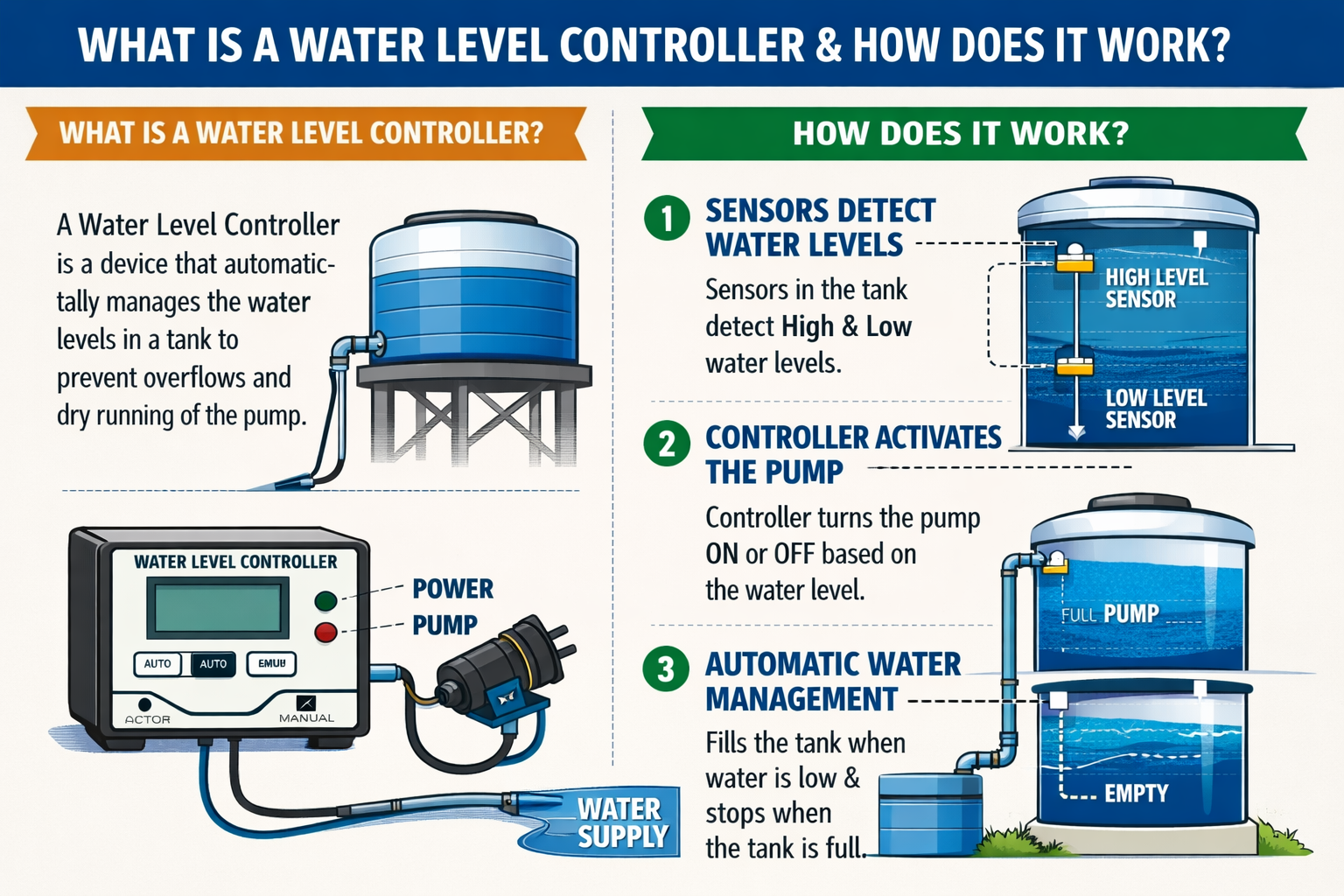
    A water level controller is an electronic device that automatically switches a water pump on or off based on the water level in a storage tank. It uses sensors placed inside the tank to detect water levels. When the water level drops below a predefined point, the controller activates the pump to refill the tank. Once the tank reaches its maximum capacity, the device switches the pump off.

    This automation eliminates the need for manual intervention and prevents common problems such as tank overflow or dry running.

    water level controller

    Key Components of a Water Level Controller

    A typical water level controller consists of several important parts:

    • Sensors: These are installed at different levels inside the tank to monitor water presence.
    • Control Unit: This processes signals from the sensors and determines when to turn the pump on or off.
    • Relay or Switching Mechanism: This connects to the pump and executes the control commands.
    • Indicator Panel: Some systems include LED indicators or digital displays to show water levels and pump status.

    When integrated with a submersible pump controller, the system becomes even more efficient, especially in deep borewell applications.

    How Does a Water Level Controller Work?

    The working principle of a water level controller is based on electrical conductivity or float-based sensing. When water touches the sensor probes at a specific level, it completes an electrical circuit, sending a signal to the control unit.

    Here is a step-by-step explanation:

    • Water level drops below the minimum mark.
    • The lower-level sensor detects the absence of water.
    • The control unit activates the pump.
    • Water fills the tank.
    • Once the water reaches the upper-level sensor, the control unit turns the pump off.

    In advanced setups, a submersible pump controller ensures that the pump is also protected from dry running, voltage fluctuations, and overload conditions.

    Types of Water Level Controllers

    There are various types of water level controller systems available to suit different needs:

    • Float-Based Controllers: These use a floating device that rises and falls with the water level.
    • Conductivity-Based Controllers: These use probes that detect water through electrical conductivity.
    • Ultrasonic Controllers: These measure water levels using sound waves and are commonly used in industrial applications.
    • Smart Controllers: These offer digital displays, remote monitoring, and smartphone integration.

    Choosing the right type depends on the size of the tank, the type of pump, and the intended application.

    Role of a Submersible Pump Controller

    A submersible pump controller is specifically designed to manage and protect submersible pumps used in borewells or deep water systems. Since submersible pumps operate underwater, they require reliable monitoring to prevent damage.

    This controller provides features such as:

    • Dry Run Protection: Prevents the pump from operating without sufficient water.
    • Overload Protection: Safeguards against excessive current draw.
    • Voltage Protection: Protects the pump from fluctuations or phase failure.
    • Automatic Operation: Works seamlessly with a water level controller to ensure a smooth water supply.

    By combining a water monitoring system with a submersible pump controller, users can significantly extend pump lifespan and reduce maintenance costs.

    Benefits of Using a Water Level Controller

    Installing a water level controller offers several practical advantages:

    • Prevents Water Overflow: Eliminates wastage caused by unattended tanks.
    • Saves Electricity: Reduces unnecessary pump operation.
    • Protects Pump Equipment: Minimizes wear and tear.
    • Reduces Manual Effort: No need to constantly monitor tank levels.
    • Ensures Consistent Water Supply: Maintains optimal storage levels at all times.

    When paired with a submersible pump controller, these benefits become even more pronounced, particularly in rural and semi-urban areas where borewell systems are common.

    Applications of Water Level Controllers

    A water level controller is widely used in:

    water level controller

    Residential Homes

    Apartment Complexes

    Commercial Buildings

    Hospitals and Schools

    Factories and Industrial Plants

    Agricultural Irrigation Systems

    In each of these environments, integrating a submersible pump controller ensures reliable performance and improved safety.

    Installation and Maintenance Tips

    Proper installation is crucial for effective performance. Sensors should be positioned accurately to detect the minimum and maximum water levels. Wiring connections must be secure and protected from moisture.

    Routine maintenance includes checking sensor functionality, cleaning probes if required, and ensuring that the pump and controller are functioning correctly. Using high-quality equipment enhances reliability and longevity.

    Conclusion

    A water level controller is an essential solution for modern water management. By automatically regulating tank levels, it prevents overflow, conserves energy, and protects pumping systems. Its integration with a submersible pump controller adds an extra layer of safety by safeguarding against dry runs, overloads, and electrical faults.

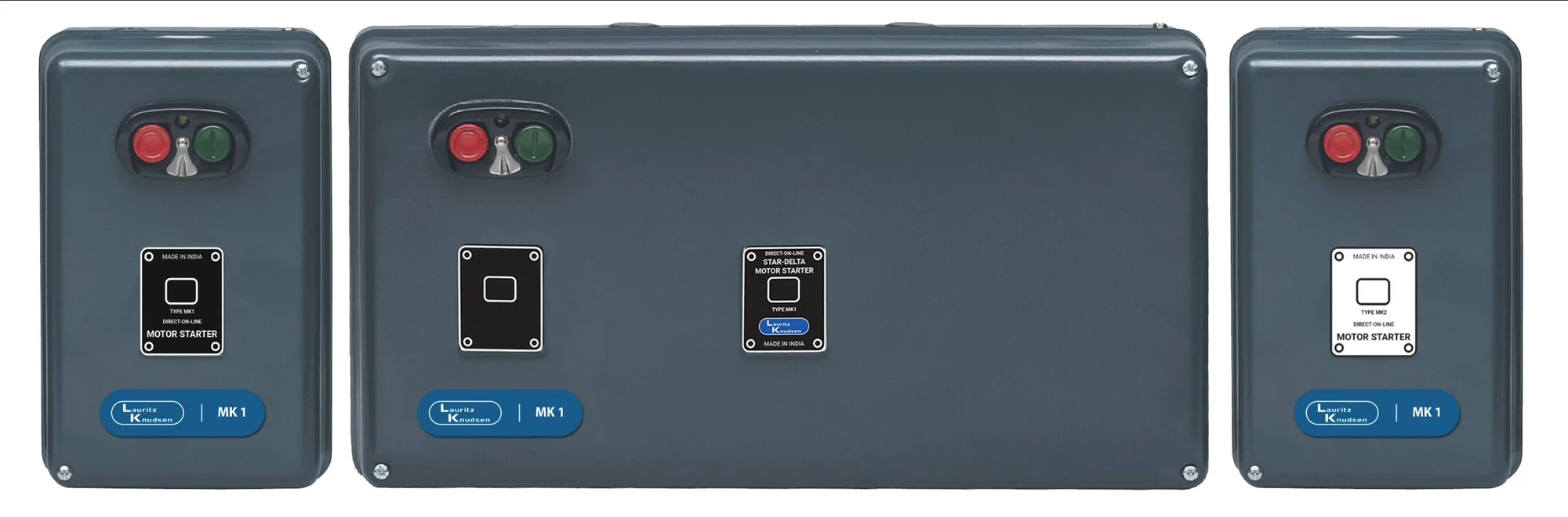
    Together, these technologies provide a smart and efficient approach to water supply management in homes, commercial spaces, and industrial facilities. For dependable and high-performance electrical and automation solutions, trusted brands like Lauritz Knudsen continue to deliver innovative products that support safe, efficient, and sustainable infrastructure systems.

  • Latest Trends in E Rickshaw Shocker Technology

    Latest Trends in E Rickshaw Shocker Technology

    Introduction to Modern Suspension Innovation

    The electric mobility industry is transforming urban transportation across India and other developing markets. Among commercial electric vehicles, the three wheeler segment has shown strong growth due to its affordability and low operating cost. As demand increases, component technology is also evolving. One of the most important upgrades in this segment is the development of the E-Rickshaw Shocker system.

    A high quality E-Rickshaw Shocker directly influences ride comfort, passenger safety, and vehicle durability. With changing road conditions and heavier daily usage, manufacturers are investing in advanced suspension solutions that deliver better stability and long service life. These improvements are not limited to design alone but also include material science, testing standards, and precision manufacturing processes.

    Evolution of E-Rickshaw Shocker Design

    In the early phase of electric rickshaw production, suspension systems were simple and primarily focused on cost reduction. Over time, market expectations shifted toward comfort and load handling capacity. Modern E-Rickshaw Shocker units now feature improved damping control, stronger spring mechanisms, and better alignment with chassis geometry.

    New generation designs are engineered to handle uneven urban roads, potholes, and continuous stop and go traffic. The improved internal valve systems allow smoother compression and rebound cycles. This ensures that the E-Rickshaw Shocker absorbs road impact effectively without transferring excessive vibration to the cabin.

    Manufacturers are also focusing on lightweight yet durable materials. By reducing unnecessary weight, the overall vehicle efficiency improves while maintaining structural strength. This approach complements other components such as the Electric Scooter Alloy Wheel, which also contributes to balanced load distribution and better road grip.

    Advanced Materials and Manufacturing Processes

    Material innovation is a key trend in suspension development. High tensile alloy steel and corrosion resistant coatings are now widely used to extend the operational life of each E-Rickshaw Shocker. These materials are selected after rigorous testing under high load and continuous stress conditions.

    One of the major advancements supporting durability is Pressure Die Casting technology. This process ensures uniform metal density and precise component dimensions. When applied in suspension related parts and housing structures, Pressure Die Casting reduces internal defects and enhances mechanical strength.

    Precision casting also improves the compatibility between the E-Rickshaw Shocker and other critical parts, including the Electric Scooter Alloy Wheel. Proper coordination between these components enhances ride balance and reduces wear on bearings and joints. As a result, fleet owners experience lower maintenance costs and improved vehicle uptime.

    Focus on Passenger Comfort and Stability

    Comfort has become a competitive factor in the electric rickshaw market. Daily commuters expect smoother rides, especially in crowded urban areas. Modern E-Rickshaw Shocker systems are designed with optimized spring stiffness and enhanced oil seal quality. These refinements prevent oil leakage and maintain consistent damping performance over extended usage.

    Another trend involves dual stage damping mechanisms that adjust according to load variation. Whether the vehicle is carrying light passengers or full capacity cargo, the E-Rickshaw Shocker maintains consistent stability. This dynamic response minimizes body roll and improves driver control.

    The integration of durable Electric Scooter Alloy Wheel systems further enhances stability. When high precision wheels work in alignment with the suspension, the vehicle experiences better traction and cornering performance. Together with Pressure Die Casting components, the overall structure becomes more reliable under demanding operating conditions.

    Durability Testing and Quality Standards

    Quality assurance has become stricter due to growing regulatory attention in the electric vehicle sector. Leading manufacturers now conduct fatigue testing, salt spray testing, and load endurance trials to validate each E-Rickshaw Shocker before market release.

    Testing under simulated road conditions ensures that the suspension system can withstand continuous vibration and shock impact. High grade materials combined with Pressure Die Casting production reduce the risk of structural cracks and deformation. This results in a longer lifecycle and improved return on investment for commercial operators.

    In addition, compatibility testing with the Electric Scooter Alloy Wheel ensures that rotational balance and shock absorption function together seamlessly. This coordinated engineering approach is setting new benchmarks in suspension reliability.

    Smart Engineering and Future Developments

    The latest trend in E-Rickshaw Shocker technology also includes smarter engineering solutions. Adjustable suspension systems are gradually entering the market, allowing customization based on terrain and load requirement. Though currently limited to premium models, this innovation indicates the direction of future development.

    Manufacturers are also investing in improved sealing systems to prevent dust and moisture entry. In regions with heavy rainfall and rough roads, this feature significantly extends product life. Combined with precision Pressure Die Casting housings, these enhancements strengthen structural integrity and performance consistency.

    Auto Die Cast India has been actively contributing to component advancement through improved production accuracy and strict quality inspection systems. By aligning suspension systems with durable Electric Scooter Alloy Wheel assemblies, the company supports integrated performance solutions for electric mobility.

    The emphasis is not only on product strength but also on sustainable manufacturing practices. Efficient material utilization and reduced wastage during Pressure Die Casting help maintain cost effectiveness while meeting performance standards.

    Conclusion

    The evolution of E-Rickshaw Shocker technology reflects the broader growth of the electric vehicle industry. Modern suspension systems are no longer basic mechanical parts but precision engineered components designed for comfort, safety, and durability. With the support of advanced materials, enhanced damping mechanisms, and manufacturing methods like Pressure Die Casting, performance standards continue to rise.

    Integration with components such as the Electric Scooter Alloy Wheel ensures balanced load handling and improved ride stability. Companies like Auto Die Cast India are contributing to this transformation by focusing on strength, accuracy, and long term reliability in suspension manufacturing.

    As demand for electric mobility expands, investing in advanced E-Rickshaw Shocker technology will remain essential for manufacturers, fleet owners, and suppliers aiming to deliver superior ride quality and operational efficiency. Contact us today to upgrade your suspension solutions with industry leading technology and proven performance.

  • Customer Onboarding Software: Building Strong Customer Relationships from Day One

    Customer Onboarding Software: Building Strong Customer Relationships from Day One

    Customer onboarding software helps businesses manage the critical journey that begins after a deal is closed or a customer signs up. This phase sets the tone for the entire customer relationship. A smooth, structured onboarding experience builds trust, accelerates time-to-value, and significantly reduces early churn. In contrast, a fragmented or delayed onboarding process can lead to confusion, frustration, and lost customers before value is ever realized.

    In today’s competitive SaaS and service-driven markets, onboarding is no longer just an operational step it is a strategic function that directly impacts retention, expansion, and lifetime value. Customer onboarding software enables businesses to deliver consistent, scalable, and customer-centric onboarding experiences.

    Table of Contents

      What Is Customer Onboarding Software?

      Customer onboarding software is a centralized platform designed to plan, track, and manage all onboarding activities. It replaces manual processes such as email threads, spreadsheets, and disconnected tools with a single source of truth for tasks, timelines, communication, and documentation.

      These platforms help teams guide customers from contract signing or signup through implementation, activation, and early adoption. By providing structure and visibility, onboarding software ensures that nothing falls through the cracks during this crucial stage.

      Why Traditional Onboarding Falls Short

      Many organizations still rely on ad-hoc onboarding processes. Sales teams hand off customers with limited context, implementation teams manage tasks in spreadsheets, and customers receive scattered emails with unclear next steps. This often leads to delayed kickoffs, missed expectations, internal misalignment, and frustrated customers.

      As customer volume grows, these issues become harder to manage. Without a standardized system, onboarding quality becomes inconsistent, and teams struggle to scale without adding operational overhead. Customer onboarding software addresses these challenges by introducing repeatability, accountability, and transparency.

      Standardization Without Losing Flexibility

      One of the most important benefits of customer onboarding software is the ability to standardize onboarding workflows. Teams can create reusable onboarding templates based on customer type, plan, industry, or service scope. These templates define tasks, milestones, timelines, and ownership, ensuring every customer follows a proven path to success.

      At the same time, onboarding software allows flexibility. Teams can customize tasks, adjust timelines, and personalize experiences based on specific customer needs. This balance between standardization and customization enables businesses to scale onboarding without treating customers as one-size-fits-all.

      Improved Collaboration and Transparency

      Customer onboarding is rarely owned by a single team. It typically involves sales, customer success, implementation, product, and sometimes support. Customer onboarding software creates a shared workspace where all stakeholders collaborate in real time.

      Many platforms include customer-facing portals that give customers visibility into onboarding progress, upcoming tasks, required actions, and shared resources. This transparency reduces back-and-forth communication, keeps customers engaged, and builds confidence in the delivery process. When customers know what’s happening and what’s expected of them, onboarding moves faster and more smoothly.

      Automation and Intelligence

      Automation is a key driver of efficiency in modern onboarding software. Automated task assignments, reminders, and follow-ups help teams stay on schedule without constant manual intervention. This ensures momentum is maintained even as onboarding volume increases.

      Advanced customer onboarding platforms also leverage AI to enhance productivity. AI-assisted features may include onboarding plan generation, meeting summaries, action items, and follow-up email suggestions. These capabilities save time for customer success and implementation teams while ensuring consistency and clarity in communication.

      Data, Insights, and Continuous Improvement

      Customer onboarding software provides valuable insights into onboarding performance. Teams can track key metrics such as time-to-value, task completion rates, customer engagement, and onboarding bottlenecks. These insights help identify risks early and highlight areas for improvement.

      By analyzing onboarding data, organizations can refine workflows, optimize templates, and proactively address issues before they impact customer satisfaction. Over time, data-driven onboarding leads to faster implementations, higher adoption rates, and improved retention.

      Better Sales-to-Onboarding Handoffs

      One of the most common points of failure in onboarding is the handoff from sales to delivery. Important context—such as customer goals, use cases, timelines, and expectations—is often lost during this transition. Customer onboarding software preserves this information by maintaining continuity from deal close to delivery.

      With full visibility into what was promised during the sales process, onboarding teams can align execution with customer expectations. This reduces miscommunication, prevents scope creep, and creates a more seamless customer experience from the very beginning.

      Scaling Without Losing Quality

      As businesses grow, onboarding more customers without sacrificing quality becomes a major challenge. Customer onboarding software enables teams to scale efficiently by reducing manual work, improving visibility, and enforcing consistent processes.

      Instead of hiring additional resources to manage complexity, teams can rely on automation, templates, and shared workflows to maintain high onboarding standards. This scalability is especially important for SaaS companies and service organizations experiencing rapid growth.

      Turning Onboarding into a Strategic Advantage

      Customer onboarding software transforms onboarding from a reactive, administrative task into a proactive, strategic capability. A well-executed onboarding experience increases customer confidence, accelerates adoption, and sets the foundation for long-term success.

      Customers who experience a smooth and structured onboarding process are more likely to remain engaged, renew subscriptions, and expand their usage over time. For businesses, this translates into higher retention, stronger relationships, and predictable revenue growth.

      Conclusion

      Customer onboarding software plays a critical role in modern customer experience strategies. By centralizing workflows, improving collaboration, enabling automation, and providing actionable insights, it helps businesses deliver consistent, high-quality onboarding at scale.

      In an environment where customer expectations are higher than ever, investing in the right onboarding software is no longer optional. It is a strategic decision that directly impacts customer satisfaction, retention, and long-term business success.

      Frequently Asked Questions (FAQs)

      What is customer onboarding software?
      Customer onboarding software is a platform that helps businesses manage the process of guiding new customers from signup or contract closure to successful product adoption using structured workflows and collaboration tools.

      Who should use customer onboarding software?
      It is ideal for SaaS companies, professional services firms, and B2B organizations that manage complex onboarding involving multiple teams and customer touchpoints.

      How does customer onboarding software reduce churn?
      By providing clear onboarding plans, better communication, and faster time-to-value, it ensures customers experience early success and remain engaged.

      Can customer onboarding software scale with growing teams?
      Yes, it standardizes and automates onboarding workflows, allowing teams to onboard more customers without sacrificing quality.

    • How Banks and Fintechs Can Use Sub-Wallets to Improve Customer Engagement

      How Banks and Fintechs Can Use Sub-Wallets to Improve Customer Engagement

      Launching a digital payment app is only the first step. The real challenge is giving customers a reason to keep coming back and using it as part of their everyday financial life. 

      Many banks and fintechs see strong early adoption, but over time, usage often narrows to just a few basic transactions. When that happens, your app becomes a utility instead of a relationship channel.

      Sub-wallets offer a practical way to change that. By allowing users to separate their money into purpose-driven balances within one wallet, you give them better control, clearer visibility, and more meaningful ways to interact with their funds. 

      This approach turns your app from a simple payment tool into a platform that supports budgeting, planning, and daily decision-making.

      In this blog, you’ll explore how sub-wallets work, why they matter for modern digital payment experiences, and how they can help you drive stronger engagement, higher transaction frequency, and long-term customer value.

      What are sub-wallets and why do they matter for modern digital payments?

      You see customers asking for better money management features. This is where sub-wallets enter the picture.

      Understanding sub-wallets in a mobile money wallet

      A mobile money wallet can help your users store, send, and manage money digitally. Similarly, a sub-wallet acts as a smaller pocket inside this main wallet. It holds funds for a specific purpose. 

      Your customers can create sub-wallets for bills, savings, subscriptions, travel, or everyday expenses. With sub-wallets, your users get the freedom to organise their money the way they want.

      Why sub-wallets are becoming essential for banks and fintechs

      You operate in a market where your customers prefer personalised services. And you must meet this demand to stay relevant. And this is exactly what sub-wallets are made for.

      These pockets allow you to offer precise money controls, goal-based saving, and category-based spending to your customers.

      Moreover, sub-wallets help you stand out because they add value to your mobile money wallet. They also support faster, simpler transactions because money stays organised at all times.

      How sub-wallets improve customer engagement

      You want your users to stay active and connected, and sub-wallets help you do that with simple, daily value. Now see how each benefit strengthens that connection.

      Help users personalize and control their spending

      Your customers want better financial control. And that’s what a sub-wallet does. It helps them set limits, allocate funds, and track activity. This way, your users feel empowered when they see their money organised. 

      This comfort further leads to consistent usage. Hence, you should create a platform that fits into their daily life.

      Enable seamless and relevant user journeys

      You want your users to move from intent to action without friction. A sub-wallet allows them to store money for specific activities. They can complete payments faster because funds stay ready. This smooth journey improves satisfaction and drives repeat transactions.

      Boost transaction frequency through micro-payments and micro-savings

      You want users to transact more. Sub-wallets play a strong role here. They support micro-savings goals, daily spends, and instant purchases without confusion. A dedicated pocket encourages users to make small but regular transactions.

      A travel sub-wallet pushes them to save tiny amounts daily. A transit sub-wallet supports quick payments during daily commutes. You increase transaction frequency without forcing behaviour. The structure naturally drives activity.

      Increase user trust with transparency and real-time tracking

      Sub-wallets add transparency to every payment of your customers. Through this, they can see where their money goes, and they can track every deduction. 

      This clarity reduces disputes and improves their confidence. Moreover, your users feel safe when they know their money stays visible.

      What banks and fintechs need in a sub-wallet-powered digital payment system

      You want a system that feels reliable, flexible, and easy to scale, and sub-wallets make that possible. Now explore the key elements that help you deliver this experience.

      Interoperability for seamless user transactions

      You operate in an ecosystem where your users expect smooth movement across channels. And hence, you need a system that lets users move funds from a sub-wallet to a main wallet, from a wallet to a bank, or even across networks. 

      Furthermore, you also reduce user drop-offs. Ultimately, your platform becomes reliable for daily use.

      High security and granular access controls

      You must protect your users and maintain compliance. A sub-wallet system with strong security features adds protection at every transaction. A sub-wallet has spend limits, authentication layers, and fraud controls. These features reduce risk and increase user trust.

      For example, A parent who creates a sub-wallet for a child expects spending limits. A business user expects access control across departments. And you can meet these needs when your system supports granular controls.

      Customizable sub-wallet structures

      You serve different customer groups. And each group has different spending habits. You need a system that lets you create customised sub-wallet structures based on behaviour and goals. This flexibility helps you build personalised journeys.

      So now you can set up wallets for utilities, education, travel, health, or micro-savings. Your customers feel understood when you provide the options they need. Personalisation increases loyalty and engagement.

      Conclusion

      Sub-wallets give you a practical way to make your digital payment app more relevant to everyday financial behavior. By helping users organize funds for specific purposes, you support better budgeting, clearer spending visibility, and more frequent interaction with your platform. 

      Over time, these small but consistent actions can strengthen engagement and make your app part of a customer’s regular financial routine, not just a tool for occasional transactions.

      For banks and fintechs evaluating how to evolve their digital payment solutions, sub-wallet functionality is not just a feature upgrade. It’s a structural improvement that supports long-term usability and trust. 

      The key is choosing a platform that combines flexibility, security, and seamless interoperability. 

      Reliable digital ewallet solutions are designed to help you build exactly this kind of experience. If you’re exploring how to integrate sub-wallet capabilities into your offering, such a solution can help you map the right approach for your market and customers.

      Read more Fintech and Finance related blogs.

    • Ubiquiti Door Access: Smart Security for Modern IT

      Ubiquiti Door Access: Smart Security for Modern IT

      Physical Security as Part of IT Hardware Strategy

      Traditionally, door access control systems were treated as standalone security tools. Today, they are increasingly viewed as a core part of IT hardware strategy. Access readers, controllers, and management software must coexist with switches, servers, and endpoints on the same network.

      Ubiquiti Door Access is built with this philosophy in mind. It leverages standard Ethernet connectivity, Power over Ethernet (PoE), and centralized management—making it feel like a natural extension of existing computer hardware deployments.

      Why Network-Based Access Control Matters

      Network-based access control enables IT teams to:

      • Manage doors remotely
      • Apply consistent security policies
      • Integrate physical access logs with IT monitoring
      • Reduce administrative overhead

      By using Ubiquiti’s UniFi ecosystem, organizations can manage door access alongside other IT hardware, such as routers, access points, and switches, from a single interface.

      Overview of the Ubiquiti Door Access Ecosystem

      UniFi Access Platform Explained

      At the heart of Ubiquiti Door Access is UniFi Access, a centralized software platform that runs on UniFi consoles such as the UniFi Dream Machine Pro or Cloud Key. This platform provides real-time monitoring, user management, and access control logic.

      UniFi Access is designed to be intuitive, even for IT teams without prior experience in physical security systems. Its clean interface aligns with Ubiquiti’s broader approach to computer hardware management—simple, scalable, and powerful.

      Key Hardware Components

      Ubiquiti Door Access relies on purpose-built IT hardware components that work together seamlessly:

      • UniFi Access Hub – The core controller that connects door locks, readers, sensors, and network infrastructure.
      • Access Readers (G2 Reader, G2 Reader Pro) – Devices used for authentication via NFC cards or mobile credentials.
      • Electric Locks and Strikes – Industry-standard locking mechanisms compatible with the system.
      • UniFi Consoles – Host the management software and integrate with the broader UniFi ecosystem.

      Each component is designed to meet enterprise-grade standards while remaining cost-effective.

      Core Features of Ubiquiti Door Access

      Centralized Management for IT Teams

      One of the biggest advantages of Ubiquiti Door Access is centralized management. From a single dashboard, administrators can:

      • Create and assign access credentials
      • Define access schedules
      • Monitor door status in real time
      • Review detailed access logs

      This level of control aligns perfectly with modern IT hardware management practices, where visibility and control are critical.

      Role-Based Access Control

      Ubiquiti Door Access supports role-based access, allowing organizations to assign permissions based on job roles, departments, or locations. For example:

      • Employees can access office areas during business hours
      • IT staff can access server rooms 24/7
      • Contractors can be restricted to specific doors and timeframes

      This granular control improves both security and operational efficiency.

      Integration with Existing IT Hardware

      Seamless Network Integration

      Ubiquiti Door Access systems connect directly to standard Ethernet networks, using PoE for power and data. This eliminates the need for specialized wiring and simplifies deployment—especially in environments already using Ubiquiti computer hardware.

      Because the system runs on the same network as other IT hardware, it benefits from existing security measures such as VLANs, firewalls, and monitoring tools.

      Unified Ecosystem Advantage

      Organizations already using UniFi networking equipment gain significant advantages. Door access, Wi-Fi, switching, and routing can all be managed from the same platform, reducing complexity and training requirements.

      This unified approach is a major reason why Ubiquiti has become a preferred vendor for integrated IT hardware solutions.

      Security and Compliance Capabilities

      Audit Logs and Monitoring

      Ubiquiti Door Access provides detailed audit logs that track:

      • Who accessed a door
      • When access occurred
      • Whether access was granted or denied

      These logs are essential for compliance, investigations, and internal audits. From an IT perspective, having physical access data integrated with digital systems enhances overall security posture.

      Data Protection and Reliability

      As with all Ubiquiti computer hardware, Door Access systems emphasize reliability and data protection. Local hosting of management software reduces dependency on third-party cloud services, giving organizations more control over sensitive access data.

      Use Cases Across Different Industries

      Small and Medium Businesses

      For SMBs, Ubiquiti Door Access offers enterprise-level features without enterprise-level costs. IT teams can deploy professional-grade security using familiar IT hardware, avoiding vendor lock-in and recurring licensing fees.

      Enterprises and Multi-Site Organizations

      Large organizations benefit from scalability and centralized management. Multiple sites can be managed from a single interface, ensuring consistent access policies across locations.

      Education and Healthcare

      In schools and healthcare facilities, controlled access is critical. Ubiquiti Door Access allows administrators to secure sensitive areas while maintaining flexibility for staff, students, and visitors.

      Deployment and Installation Considerations

      Simplified Installation Process

      Compared to traditional access control systems, Ubiquiti Door Access is easier to install. Standard Ethernet cabling, PoE switches, and intuitive configuration reduce deployment time.

      This simplicity is particularly appealing to IT professionals already experienced with computer hardware installations.

      Scalability for Future Growth

      The modular design allows organizations to start small and expand over time. Additional doors, readers, and users can be added without redesigning the entire system.

      This future-proof approach aligns with long-term IT hardware planning.

      Cost Efficiency and Total Cost of Ownership

      No Per-User Licensing Fees

      Unlike many access control platforms, Ubiquiti Door Access does not rely on recurring per-user fees. This significantly reduces total cost of ownership, especially for growing organizations.

      Hardware-Driven Value

      By investing in high-quality IT hardware upfront, organizations gain long-term value with minimal ongoing costs. This model appeals to IT departments seeking predictable budgets and scalable solutions.

      Comparing Ubiquiti Door Access to Traditional Systems

      Traditional Access Control Limitations

      Legacy systems often require:

      • Proprietary controllers
      • Expensive licensing
      • Complex integrations
      • Third-party management software

      These limitations can clash with modern IT workflows.

      Ubiquiti’s Modern Approach

      Ubiquiti Door Access aligns with contemporary computer hardware and networking standards. Its software-defined approach, combined with robust hardware, makes it easier to deploy, manage, and scale.

      Future of Door Access in IT Hardware

      Convergence of Physical and Digital Security

      As organizations continue to converge physical and digital security, solutions like Ubiquiti Door Access will play a central role. Door access data can complement cybersecurity efforts, providing a more holistic view of organizational security.

      Innovation within the UniFi Ecosystem

      Ubiquiti’s ongoing innovation in IT hardware suggests that Door Access will continue to evolve. Deeper integrations, enhanced analytics, and smarter automation are likely to become standard features.

      Best Practices for Implementing Ubiquiti Door Access

      Plan with IT and Security Teams

      Successful implementation requires collaboration between IT and security stakeholders. Network design, access policies, and compliance requirements should be aligned from the start.

      Leverage Existing Computer Hardware

      Organizations already using Ubiquiti computer hardware should leverage existing switches, consoles, and network architecture to maximize efficiency and reduce costs.

      Conclusion: Why Ubiquiti Door Access Is a Smart Choice

      Ubiquiti Door Access represents a modern, IT-centric approach to physical security. By combining reliable IT hardware, intuitive software, and seamless network integration, it empowers organizations to manage access with confidence and control.

      For IT professionals seeking a scalable, cost-effective, and future-ready access control solution, Ubiquiti Door Access stands out as a compelling choice. As physical security continues to merge with digital infrastructure, solutions built with IT at their core will define the next generation of secure workplaces.

    • How to Choose the Best Water Heater Service Professionals?

      How to Choose the Best Water Heater Service Professionals?

      Water Heater Services are essential for providing an uninterrupted, efficient hot water supply to a home. Careful consideration must be given to evaluating professionals, since safety, energy efficiency, and cost efficiency are directly related to their service quality.

      Such homeowners know what to avoid, thus preventing unwanted repairs, surprise costs, and repetitive system issues, as well as unnecessary fixes. Thus, it becomes about comfort, consistency, and peace of mind for the entire year. Let us explore ways to choose the best professionals for water heater repair.

      Understanding What Defines a Dependable Service Provider

      Experience And Expertise

      All experienced professionals have gained a rather in-depth knowledge of the variations in water heaters across models, fuel types, and performance issues. These years of field experience allow technicians to accurately identify issues and propose an appropriate course of action for the home. 

      Licensing And Certifications

      Licensing and certification usually indicate that technicians have met industry standards and relevant safety regulations. 

      Especially when dealing with gas, electrical, and plumbing connections, licensed professionals strictly adhere to guidelines that protect the household and ensure compliance with local codes.

      Such licensing provides an extra layer of protection for homeowners against accidental damage not covered under the insurance policy. The risks associated with improper installations or unsafe repairs are significantly reduced when certified water heater repair experts are used.

      Assessment Of the Quality of Service and Customer Care

      Open And Honest Communication

      Trustworthy professionals conduct an open discussion about the system’s status and available options. Clear, non-technical jargon, verbal and written cost estimates in easy terms, and a description of the services to be performed, with estimated costs and time of completion. Transparency builds trust and allows the homeowner to feel secure in the decision they have made. 

      Response And Availability

      This includes a fast response to customer needs and scheduling that respects the client’s time. Most reputable heating problems take somewhat longer to address, especially when hot water systems are suddenly disrupted, as this disrupts people’s daily routines. An efficient response indicates customer-oriented operations. 

      This way, Water Heater Services becomes the benchmark for real comparison among homeowners in terms of service scope and responsiveness at the middle of the decision-making process, not just one-time fixes. 

      Therefore, it is always important for you to choose a professional who understands your needs and delivers the best solutions. 

      Regional Stable Knowledge with Understanding and Expertise

      Expertise In Local Water Conditions

      Knowledge of very localized water conditions puts the expert in a much more favorable position to arrive at more relevant, customized solutions. Water conditions vary in terms of mineral concentration, hard water buildup, and sediment levels, all of which affect how well the system performs. 

      Knowledge of Water Softener Installation and Maintenance in Phoenix enables technicians to combat mineral buildup, which reduces the lifespan of heating systems. Local expertise ensures better recommendations and better long-term results.

      Extensive Interaction 

      The operating companies within several service areas have far wider insights into system performance and various maintenance regimes. 

      Exposure to varied conditions, much like those encountered by Las Vegas Water Heater Services (LVWHS), strengthens problem-solving and adaptability; a broader perspective enables professionals to transfer successfully tested solutions to familiar settings, enhancing efficiency and reliability for homeowners. 

      Maintenance And Repair Instructions

      Preventive Maintenance and System Instruction

      Quality professionals teach clients seriously about what they should do for routine maintenance to extend the system’s operational life. Flushing, monitoring temperature settings, and looking out for early warning signs are other techniques that help prevent a larger headache when most major problems arise. 

      Fair Pricing and Professional Approach

      Pricing is fair if the workmanship is good and there are no compromises on quality. Generally, an extremely low quote is a clear indication of rushed workmanship and/or the use of questionable-quality materials. 

      The mark of a reliable one is early arrival, a clean working environment, a polite demeanor, and clarity in his reports, documentation, and other work. 

      Final Words

      Choosing that group of professional water heater repair technicians is like embracing a philosophy that emphasizes safety, transparency, and experience. 

      The homeowner should feel free to ask questions and be confident in the answers. Sound relationships between professionals and homeowners form a strong base supporting all examinations, care, and predictable performance thereafter. 

      Selection of experts who consistently deliver the same outcomes means that Water Heater Services offer every individual comfort, efficiency, and, finally, peace of mind for years.

    • Cloud-Based PPC Management for Global eCommerce Brands

      Cloud-Based PPC Management for Global eCommerce Brands

      While delving into the constantly changing digital environment, I came to the conclusion that the major eCommerce brands all over the world are turning more and more to Cloud-Based PPC Management in order to scale their ad performance through different markets. This change has greatly influenced the way companies work on campaigns, particularly when it comes to the use of very precise and quick platforms. Indeed, in my opinion and backed by my market research, cloud systems have become a must for advertisers who want to make their activities such as budget assignment, performance enhancement, and cross-channel reporting less complicated.

      Under these circumstances, a great deal of brands still prefer to ask for professional help in the areas of google ads management services, google ads management company, google ads management agency, adwords management services, google adwords services, and google adwords management services, thus making sure that proper human control and cloud-based automation are in place for their paid campaigns.

      Why Global eCommerce Brands Need Cloud-Based PPC Management

      According to market research, the global eCommerce market is highly competitive, with different brands trying to get customer attention in various regions. In many cases, traditional PPC [pay-per-click] systems do not deliver the expected results as they can’t keep pace with the rapid change in customer behavior in different countries.

      On the other hand, cloud-based systems enable users to access performance data in real time, so the marketing team can modify the campaigns wherever they are and whenever they want. From my research, this feature is crucial for companies that are either experiencing fast growth or are in the situation of handling a huge advertising budget.

      PPC [pay-per-click] management in the cloud also gives advertisers the power to combine their campaigns, which will cut down the time spent on making reports and will also reduce the chance of making mistakes that come from manual management of several platforms. For brands selling globally through eCommerce, this translates to getting more uniform results and being able to synchronize campaigns with overall business goals.

      Benefits of Cloud-Based PPC Management for Global eCommerce

      1. Real-Time Performance Optimization

      Based on my understanding, one of the major advantages of using PPC solutions powered by the cloud is that they allow for real-time optimization. E-commerce companies can make instant changes to their bids, stop ads that are not performing well, and move money around according to the latest performance metrics.

      In this fast-paced market, the ability to change quickly helps the companies to get the most out of their investment in advertising (ROAS) and at the same time to cut down on unnecessary advertising costs.

      2. Enhanced Collaboration Across Markets

      Most probably, a global brand has its marketing teams divided among different geographic areas. The use of cloud-based tools facilitates collaboration among different teams and thus everyone can access the same information, share reports, and discuss campaign strategies.

      As per my findings, this leads to less miscommunication and better consistency of campaigns in different markets.

      3. Automated Reporting and Centralized Insights

      Automated reports, which are generated by the cloud platforms, provide data on impressions, CTR, conversion rates, and ROAS. With the help of these reports, the teams can take educated decisions without the hassle of data manual compilation.

      The process of automation is time-saving, as well as guaranteeing that the campaigns are still in line with the performance objectives.

      4. Better Scalability for Growing Brands

      Global eCommerce brands frequently venture into new markets. In my opinion, cloud-based systems enable such scalability without any hassle—companies can set up new advertising infrastructures in new areas without the entire process of tearing down and rebuilding their current infrastructures.

      Thus, it is not a problem anymore to expand PPC activities as the company grows in the international market.

      How Cloud-Based PPC Tools Improve Campaign Efficiency

      Automated Bidding Systems

      Real-time signals like device type, location, time of day, and keyword intent are used by AI-assisted bidding systems to take decisions. From my research, it appears that these automated systems are superior to manual bidding in most occasions, particularly in case of large campaigns.

      Central Bill Management

      Cloud solutions allow companies to oversee their budgets from one control panel through all the different regions. Rather than checking various accounts manually, managers are able to see the whole world’s spending habits and make more precise forecasts of expenses in the future.

      All-in-One-Platform Solution

      Worldwide brands usually promote themselves through Google Ads, Microsoft Ads, Amazon Ads, TikTok Ads, and many others. Cloud-based services connect all these advertising channels and present them in one integrated dashboard. This not only allows brands to have a common perspective of the performance but also makes it easier to manage the campaigns.

      Why Cloud Solutions Outperform Traditional PPC Systems

      Traditional PPC Management Limitations:

      • Needs manual updates
      • Not easy to scale internationally
      • Lengthy reporting
      • Data silos between different platforms
      • Cloud-Based PPC Benefits:
      • Instant updates
      • Workflows that are automated
      • Dashboards that are centralized
      • Quick decision-making
      • Greater consistency between regions

      According to market analysis, businesses changing to cloud-based solutions usually indicate better efficiency, lower costs, and higher returns.

      Strategies to Implement Cloud-Based PPC Management Effectively

      1. Consolidate All Advertising Platforms

      The unification of your PPC efforts to a single place will be interpreted as a signal for one view only. My findings point out that if you take it to the extreme of integrating the maximum number of platforms, then the insights you receive will be the most accurate.

      2. Automate Your Everyday Tasks

      You can eliminate human mistakes by automating budget alterations, tracking of keywords, and optimizing the bids. Furthermore, automation allows the PPC managers to devote their time to strategic decisions.

      3. Employ Analytical Tools in the Cloud

      The digital commerce brands have a great advantage over the competition because of the cloud-based analytics that allow them to get ahead of the game by providing them with predictive insights. These insights, in turn, make the brands more adaptable to the changes in demand, the ups and downs of the season, and the shifts in the behavior of the users.

      4. Set Up a Framework for Targeting Multiple Markets

      Although a world-wide advertisement might need to say different things in different places, access to the cloud implies that the company is able to easily manage the multilingual ads, currency conversions, and bidding strategies in different regions.

      5. Use AI for Better Forecasting

      AI tools analyze current data and predict future outcomes. According to my understanding, forecasting allows brands to plan their budgets and product launches more efficiently.

      The Future of PPC for Global eCommerce Brands

      Based on my investigation, the upcoming period of PPC advertising will be dominated by AI, automation, and cloud infrastructure along with the integration of various channels. The global eCommerce brands will heavily depend on the cloud-processed PPC solutions to handle different customer journeys and to be in the competition.

      • Generative AI will lead the way in predictive bidding 
      • Multi-touch attribution analytics 
      • Globalized automation templates 
      • Hyper-personalized ad variations 

      In the future, cloud-based PPC tools will be more user-friendly and flexible in terms of large-scale global ad campaign management done by brands with maximum precision and minimal cost.

      Conclusion

      According to my research and analysis, the use of cloud-based PPC management is an essential requirement for the world’s leading eCommerce brands rather than an optional service. The support of cloud technology to automate the complex, to have instant visibility of the situation and to control all the global campaigns through one dashboard offers a strategic edge that the traditional ones cannot provide at all.

      For brands that are thinking of taking their business to the next level, working with the right partners can help them to keep up the same standard, to increase the performance and to make sure that the campaigns are in line with the company’s goals. Besides, many companies empower their advertising through a meta ads agency, meta advertising agency, meta ad agency, meta ads company, or specialized meta ads services, thus ensuring their paid media efforts are not only effective but also competitive in every platform and region.

    • Customer Onboarding Software: The Definitive Guide to Faster Value, Happier Customers, and Scalable Success

      Customer Onboarding Software: The Definitive Guide to Faster Value, Happier Customers, and Scalable Success

      Customer onboarding is one of the most influential stages in the entire SaaS and B2B customer journey. It shapes the first impression, establishes trust, determines how quickly customers reach value, and directly impacts long-term retention. In many cases, onboarding is the moment when customers decide whether your product becomes a key part of their workflow or just another tool that fades away before renewal.

      As companies scale, manual onboarding quickly becomes unsustainable. Spreadsheets turn into a maze, email threads multiply, tasks get lost, and teams spend more time coordinating than actually helping customers. That’s where customer onboarding software changes everything. It offers structure, automation, visibility, and consistency, turning onboarding into a predictable, efficient, and customer-friendly process.

      This expanded guide explains what customer onboarding software is, why companies rely on it, how different teams utilize it, which features are most important, and how AI is reshaping the future of onboarding.

      Table of Contents

      Why Onboarding Has Become the Most Critical Phase in the SaaS Customer Journey

      Most SaaS and B2B businesses assume churn happens later in the lifecycle. But research consistently shows that the seeds of churn are planted during onboarding.

      Customers who don’t experience value early:

      • disengage faster
      • require more support
      • adopt fewer features
      • fail to activate
      • lose confidence before renewal

      On the flip side, companies with strong onboarding see:

      • faster product adoption
      • higher retention
      • increased expansion revenue
      • fewer support tickets
      • closer customer relationships
      • more repeatable delivery processes

      This is why so many teams today view onboarding not as a “project phase” but as a revenue engine.

      But the challenge is always the same: scaling onboarding without losing quality.

      When you have 5 customers, you can manage them manually. When you have 50 or 500… everything cracks.

      Common problems emerge:

      • No consistent onboarding process
      • No shared source of truth
      • No timeline visibility
      • No predictable setup duration
      • No transparency for customers
      • No insights into delays or risks
      • No way to scale without hiring more people

      These problems are not because teams are inefficient, they’re because onboarding is fundamentally cross-functional and complex.

      Customer onboarding software solves this complexity.

      What Exactly Is Customer Onboarding Software?

      Customer Onboarding Software

      Customer onboarding software is a dedicated platform built specifically to help companies manage, automate, and scale the B2B onboarding process. Unlike generic project management tools, it is designed with the customer’s journey in mind from kickoff to configuration to training to go-live.

      It acts as

      • a workflow engine
      • a project plan generator
      • a customer communication hub
      • a progress tracker
      • a documentation space
      • a collaboration portal
      • a risk and delay monitoring system

      Everything related to onboarding lives in one place. Internal teams know what to do. Customers know what to expect. Leaders know where the bottlenecks are.

      In short: it turns onboarding from a chaotic experience into a controlled, scalable, repeatable machine.

      Why Companies Are Moving Away from Manual Onboarding

      Manual onboarding breaks down for four major reasons:

      1. It’s impossible to maintain consistency.

      Two CSMs may deliver onboarding completely differently, creating unpredictable customer experiences.

      2. It’s slow and repetitive.

      Teams recreate the same tasks, emails, updates, and documents every time.

      3. Customers don’t know what is happening.

      They constantly ask:

      • What’s next?
      • Who owns which task?
      • Why is something delayed?
      • What do we need to provide?

      Lack of transparency damages trust and slows progress.

      4. Leaders have zero visibility.

      Without a system, there’s no clear answer to:

      • How long does onboarding take
      • Where the bottlenecks are
      • How many customers are stuck
      • Whether customers are at risk

      Customer onboarding software addresses these issues in a structured environment.

      The Real Business Impact of Customer Onboarding Software

      Companies don’t adopt onboarding software because it’s trendy; they adopt it because it solves extremely expensive operational problems. Here’s the real impact:

      Impact of Customer Onboarding Software

      1. Faster Time-to-Value (TTV)

      When onboarding begins instantly instead of being manually assembled, customers reach “first value” sooner.

      A faster TTV = higher retention.

      2. A Consistent, Repeatable Onboarding Experience

      Playbooks and templates standardize delivery, so every customer gets the same quality regardless of which CSM manages them.

      3. Clear Visibility for Internal and External Teams

      Everyone from CS to Sales to Product to the customer can see exactly where the project stands.

      4. Fewer Repetitive Tasks

      Automating manual work saves hours every week for CSMs and implementation teams.

      5. Smooth Sales → CS Handoffs

      With shared timelines and structured workflows, no details are lost after a deal closes.

      6. Reduced Churn and Higher Renewal Rates

      When onboarding is predictable, and customers see value early, renewal becomes natural instead of uncertain.

      Core Features of High-Quality Customer Onboarding Software

      While tools vary, the best onboarding platforms offer several essential features.

      1. Onboarding Playbooks & Templates

      These allow teams to create reusable workflows for different customer types: enterprise, SMB, high-touch, low-touch, or industry-specific.

      Templates remove guesswork and drive repeatability.

      2. Automated Project Plan Creation

      Modern onboarding tools can:

      • generate full onboarding plans instantly
      • assign tasks automatically
      • add dependencies
      • create checklists
      • attach documents
      • define timelines

      This eliminates the manual prep of CSMs to spend hours on.

      3. Customer Portal

      Instead of sending dozens of emails, customers access a clean portal where they can:

      • upload required documents
      • complete tasks
      • see deadlines
      • view progress
      • chat with onboarding teams
      • track the roadmap to go-live

      It reduces confusion and increases accountability.

      4. Task Management and SLA Tracking

      Clear owners, due dates, and automatic reminders ensure nothing slips.

      5. Collaboration and Communication Tools

      Onboarding software centralizes communication, so tasks and discussions don’t disappear into Slack threads or emails.

      6. Integration with CRM, Support, and Product Tools

      Syncing data across Salesforce, HubSpot, Zendesk, analytics tools, and ticketing platforms keeps teams aligned.

      7. Reports, Insights, and Customer Health Indicators

      Leaders get dashboards showing:

      • time to launch
      • bottlenecks
      • overdue tasks
      • customer inactivity
      • real-time health metrics
      • risk signals

      This transforms onboarding into a data-driven process.

      How Each Team Uses Customer Onboarding Software

      1. Customer Success Teams

      They finally get:

      • clarity
      • structured workflows
      • fewer admin tasks
      • more time for relationship building

      2. Implementation and Professional Services

      Complex and technical onboarding becomes smoother with timelines, dependencies, and documentation in one place.

      3. Sales Teams

      They hand off customers more cleanly, improving early customer trust.

      4. Support Teams

      They receive fewer repetitive questions because customers know what to expect and where to find resources.

      5. Product Teams

      Onboarding insights reveal where features cause friction or where customers get stuck. Across the organization, onboarding software aligns everyone around one shared customer journey.

      Why Onboarding Software Is Becoming a Strategic Investment for Growth

      Five years ago, onboarding software was a niche product category. Today, it is becoming one of the core tools in the CX + CS tech stack.

      There are three major reasons:

      1. Customer expectations have changed

      Customers want:

      • clear timelines
      • transparency
      • faster implementation
      • no surprises

      A messy onboarding environment feels unprofessional and reduces trust instantly.

      2. SaaS complexity has increased

      Integrations, data migration, compliance, and multi-stakeholder onboarding make manual processes unrealistic.

      3. Teams need to scale without hiring endlessly

      A structured platform lets you onboard more customers with the same team, improving margins and reducing operational fatigue.

      As a company grows, onboarding software becomes a foundation for operations, just like CRM and ticketing systems.

      The Best Ways to Use Customer Onboarding Software Effectively

      To get the most value, teams should follow these best practices:

      1. Create Multiple Playbooks for Different Segments

      Enterprise onboarding doesn’t resemble SMB onboarding. Each needs its own workflow.

      2. Define Clear Milestones and Success Criteria

      Every onboarding flow should answer:

      • What does “go-live” mean?
      • What needs to happen before that?
      • What is done internally vs. externally?

      Clarity reduces delays.

      3. Automate Everything That Repeats

      Task creation
      Reminders
      Follow-ups
      Document sharing
      Kickoff preparation

      The less manual work, the faster customers get value.

      4. Monitor Risk Signals Early

      Overdue tasks, customer inactivity, or delays in critical milestones should trigger alerts.

      5. Centralize Documentation

      Everything should live inside the onboarding system: training videos, guides, templates, checklists, and FAQs.

      6. Measure and Improve the Process

      Teams that measure onboarding continuously improve it.

      The Future of Customer Onboarding: AI-Powered Experiences

      AI is changing onboarding faster than any other part of the customer journey.

      Here’s what AI already makes possible:

      1. Auto-Generated Onboarding Plans

      Instead of building onboarding projects manually, AI can create:

      • complete project structures
      • tasks and subtasks
      • sequences
      • checklists
      • descriptions
      • estimated timelines

      This eliminates the repetitive setup work that slows down onboarding teams.

      2. Predictive Risk Alerts

      AI can identify patterns such as

      • customers who are falling behind
      • incomplete tasks likely to block launch
      • segments that consistently struggle
      • areas where delays most frequently occur

      This lets CSMs fix issues ahead of time.

      3. Personalized Workflows for Each Customer

      AI can build onboarding flows based on:

      • industry
      • use case
      • maturity level
      • segment
      • team size
      • historical onboarding success

      Every customer gets a customized onboarding experience automatically.

      4. Documentation and Communication Automation

      AI can generate:

      • status updates
      • onboarding instructions
      • training guides
      • kickoff summaries
      • customer messages

      This saves hours and ensures consistent communication.

      5. Sentiment and Engagement Monitoring

      AI can analyze conversations, feedback, and usage signals to detect frustration or drop-off early.

      The future of onboarding is dynamic, intelligent, and deeply automated, not built manually step-by-step.

      Final Thoughts

      Customer onboarding software isn’t just a tool; it’s the backbone of a predictable, scalable customer experience. As markets get more competitive and customer expectations rise, companies that deliver fast, structured, and transparent onboarding will outperform those relying on spreadsheets and manual processes.

      A strong onboarding experience builds trust, drives adoption, accelerates value, reduces churn, and lays out the foundation for long-term customer success. And the right software ensures that experience is repeatable at scale.

      FAQs

      1. What is customer onboarding software?

      Customer onboarding software is a dedicated platform that helps teams manage, automate, and track the entire onboarding journey from kickoff to go-live. It centralizes tasks, timelines, documentation, and customer communication, so onboarding becomes predictable, transparent, and repeatable. Instead of using spreadsheets and email threads, teams use onboarding software to deliver a consistent experience to every customer.

      2. Why is customer onboarding software important for SaaS and B2B companies?

      Because the first 30–90 days determine whether a customer adopts your product or churns. Onboarding software helps companies reduce delays, eliminate manual work, standardize the process, and get customers to value faster. When onboarding is smooth, customers trust you, activate faster, and are far more likely to renew.

      3. What are the key features to look for in customer onboarding software?

      Look for templates/playbooks, automated project creation, customer-facing portals, task and SLA management, milestone tracking, documentation sharing, collaboration tools, and integrations with CRM and support platforms. Advanced solutions also include AI-generated project plans, predictive risk alerts, and onboarding analytics.

      4. How does onboarding software improve time-to-value (TTV)?

      It eliminates the prep work, guesswork, and manual steps that typically slow onboarding down. With templates, automation, customer portals, and instant project creation, customers begin implementation immediately. This leads to faster activation, lower friction, and a much shorter path to value.

      5. Who uses customer onboarding software within a company?

      Primarily Customer Success Managers, Implementation Specialists, Professional Services teams, and Onboarding Managers. But Sales, Product, and Support teams also depend on on onboarding software for visibility, resource planning, and smooth handoffs during the early customer lifecycle.

      6. Can onboarding software integrate with existing CRM and support systems?

      Yes. Most onboarding platforms integrate seamlessly with tools like HubSpot, Salesforce, Zendesk, Intercom, Slack, Jira, product analytics tools, and CS platforms. These integrations ensure customer data flows smoothly between teams and eliminate duplicate work.

      7. How do I know if my company needs onboarding software?

      You likely need onboarding software if you’re seeing delays, inconsistent delivery, slow customer activation, missing documentation, poor handoffs, or a growing volume of onboarding projects. If your team is building onboarding plans manually or juggling spreadsheets, onboarding software will immediately improve speed, transparency, and customer satisfaction.

    • Why New York Law Firms Struggle with Online Visibility & How to Improve It

      Why New York Law Firms Struggle with Online Visibility & How to Improve It

      New York is home to numerous law firms; from solo attorneys in Brooklyn to major corporate names in Midtown, they all compete for the same digital space. But here’s the truth: even the most talented lawyers struggle to get noticed online.

      You could have a brilliant team, glowing testimonials, and years of experience, but if your online presence doesn’t reflect that, potential clients will scroll right past you.

      That’s where partnering with a professional website development company in New York can completely change the game. Let’s unpack why so many law firm websites fail to bring in clients, and what practical steps you can take to fix it.

      Table of Contents

      1. Your Website Looks Good But Doesn’t Work

      Many law firm websites appear polished. Nice fonts, sharp headshots, maybe even a list of awards. But looks aren’t everything, if your website is slow, confusing, or hard to navigate, people won’t stick around.

      Think about it: when someone’s stressed about a legal issue, they don’t want to dig through endless menus or wait for pages to load. They want clear answers, fast.

      How to fix it:

      Make your site as easy and intuitive as possible. Focus on faster load times, clean menus, and a clear “Book a Consultation” button. Every second counts when someone’s deciding whether to call you or move on.

      2. You’re Not Speaking the Client’s Language

      Most law firm websites are packed with legal jargon, which might sound professional to you but feels confusing to most people.

      Phrases like “comprehensive litigation services” don’t mean much to someone who just wants to know, “Can you help me with my landlord problem?”

      How to fix it:

      Write the way your clients talk. Instead of “We offer corporate advisory services,” say, “We help New York businesses handle legal challenges and contracts.” When you speak their language, people trust you faster, and trust is what turns a visitor into a lead.

      3. Weak SEO = Invisible Online

      You might not think much about SEO, but Google definitely does. If your site isn’t optimized for the right local keywords, it’s like setting up a beautiful law office in the middle of the desert.

      Clients aren’t searching for “litigation solutions.” They’re typing “business lawyer in Manhattan” or “divorce attorney near me.” If your site doesn’t match what people actually search for, it won’t show up, no matter how good your content is.

      How to fix it:

      Do a little keyword research (or have your developer help). Use location-based terms, and build blogs that answer the exact questions your audience is asking online.

      4. You Haven’t Built Enough Trust Online

      Hiring a lawyer is a big decision. Clients don’t just want skill, they want reassurance. And too many websites forget to show that.

      No testimonials, no success stories, no photos of real team members, just a cold wall of text. That doesn’t build confidence.

      How to fix it:

      Show the human side of your firm. Add client stories, include photos of your actual team, and display your credentials or awards proudly. A little personality goes a long way.

      A good website development company in New York can help you design a layout that balances professionalism with warmth, so clients feel confident and comfortable.

      5. You’re Not Optimized for Local Searches

      If your firm is in Queens or the Bronx, being visible in those local areas is far more valuable than showing up for general “New York lawyers.”

      Yet, so many law firms ignore local SEO. That means your competition, the one just around the corner, might be getting all the traffic you’re missing.

      How to fix it:

      • Claim your Google Business Profile.
      • Keep your address and contact info consistent everywhere.
      • Get happy clients to leave reviews.
      • Post updates about community events or local cases.

      These small things make a huge difference in how Google ranks you locally.

      6. Your Site Isn’t Mobile-Friendly

      Picture this: someone gets into a car accident, pulls out their phone, and types “injury lawyer near me.” Your site pops up, but it takes forever to load, or the buttons are too tiny to click. They leave instantly.

      You just lost a client.

      How to fix it:

      Make sure your website works perfectly on phones and tablets. Ask your developer to test the mobile speed and layout. On-the-go users should be able to call or book you in two taps, not ten.

      7. No Clear Call-to-Action (CTA)

      If your site doesn’t tell people what to do next, they won’t do anything. Many law firm sites hide their contact details or put their consultation form somewhere at the bottom, and that’s a conversion killer.

      How to fix it:

      Add visible, action-focused buttons like “Book a Free Consultation” or “Talk to a Lawyer Today.” Place them in multiple spots, not just the homepage.

      Make it ridiculously easy for someone to contact you.

      8. You’re Ignoring the Data

      A lot of firms spend money on websites but never check how they’re performing. Without tracking, you can’t know what’s working, or what’s driving people away.

      How to fix it:

      Use Google Analytics or Search Console to monitor traffic, user behavior, and keyword rankings. That data shows you where you need to improve, instead of guessing.

      9. Your Brand Feels Cold or Outdated

      Let’s be honest, people judge your firm within seconds of landing on your website. If your design feels outdated or overly formal, it can unintentionally make your firm seem disconnected.

      How to fix it:

      Invest in branding that feels both professional and modern. Use real imagery, consistent colors, and friendly fonts. A sleek, trustworthy design tells visitors: you’re serious about your work, and your clients.

      This is another area where a skilled website development company in New York can help you strike the perfect balance between credibility and approachability.

      10. You’re Not Showing Up Beyond Your Website

      Your online visibility doesn’t end with your homepage. If you’re not active on LinkedIn, legal directories, or review sites, you’re missing opportunities to be discovered.

      How to fix it:

      Share your blogs on professional networks. Keep your profiles updated. Be part of online conversations in your niche. When clients see your name in multiple trusted places, it reinforces your authority.

      Conclusion

      If your New York law firm is struggling to attract clients online, you’re not alone. Most firms face the same problem, they focus on their legal expertise but overlook how they present it digitally.

      The good news? You don’t need a massive budget to fix it. With a bit of SEO strategy, better content, and a clean design, your website can start pulling in the kind of leads you actually want.

      When you work with the right web development company in New York, you’re not just getting a website, you’re building a 24/7 marketing asset that speaks to your clients, builds trust, and drives real business.

      Looking for more digital visibility tips?
      Check out more insights on MozBlogger, where marketing meets strategy for businesses that want to grow online.